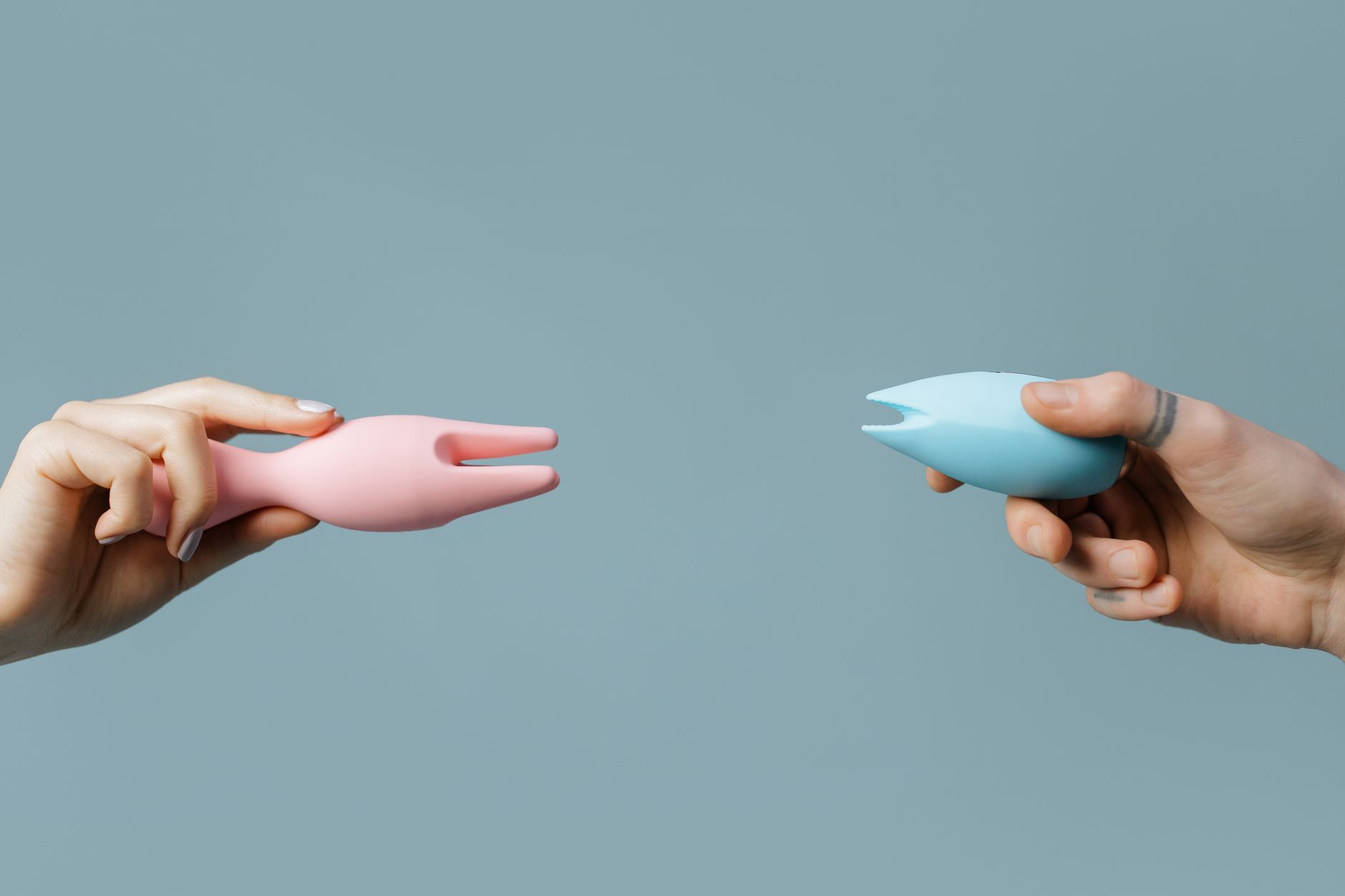
How Clitoral Vibrators Help Restore Pleasure When Coming Off Birth Control
Let's start with what you probably already know: hormonal birth control changes how your body feels. What you might not know is that this isn't a side effect, it's literally the point. Hormonal contraceptives suppress ovulation by flattening your natural hormone cycle. That flatline affects more than just fertility. It affects desire, arousal, lubrication, and orgasm intensity.
So when you stop taking the pill, patch, shot, or ring, your body doesn't instantly snap back to how it felt before. The return of pleasure is a process. And clitoral vibrators, especially models like the Lemon clitoral vibrator, can be invaluable tools during that transition.
What hormonal birth control actually does to pleasure
This matters because a lot of people assume they've just gotten older or lost interest. Not quite. Hormonal contraceptives, particularly those containing progestin, are known suppressors of sexual desire. The mechanism is straightforward: they suppress testosterone production. And yes, people with vulvas produce testosterone. It's not a small amount. It's a major driver of desire.
Birth control also thickens cervical mucus, which is great for contraception but changes how lubrication feels. Tissue thickness around the vagina and clitoris shifts too. Arousal takes longer to build. Orgasms, when they happen, might feel shallower or require more direct stimulation.
Here's the thing though: none of this means you're broken. It means your nervous system has been running on a particular chemical landscape for months or years. You've adapted to it. Your partner (if you have one) has adapted to it. When you remove that landscape, everything feels different because it is different.
The timeline of pleasure coming back
Three to six months. That's typically how long it takes for hormone-dependent aspects of pleasure to noticeably shift after stopping birth control.
Week one to two: Expect mood swings, headaches, maybe breakthrough bleeding. Pleasure is probably not your priority.
Week three to six: Testosterone starts rising. You might notice a shift in your baseline desire. Not necessarily a spike. Just a shift. Things feel less flattened.
Month two to three: This is when people start telling me things are "different." Arousal builds faster. Lubrication happens more readily. Sensation sharpens. Some people report orgasms feeling more intense than they have in years.
Month four to six: Your cycle stabilizes (if you have one). The variability in desire across your cycle becomes noticeable again. This is normal. It's also something you haven't felt in a while if you've been on hormonal contraception.
Why sensation returns unevenly
Your clitoris doesn't wake up all at once. The tissue has nerve density that's stable, yes. But your perception of sensation changes as hormone levels rise. The blood flow to genital tissue shifts. The sensitivity of nerve endings to touch and pressure shifts.
Some people notice that certain kinds of touch feel amazing again. Others find that what used to work doesn't anymore. The sensitivity that hormonal birth control suppressed comes roaring back, and sometimes it feels overwhelming or almost too intense.
This is exactly where tools like clitoral vibrators become useful. A vibrator lets you titrate sensation. You control the intensity. You can start low and experiment. You're not relying on touch alone, which can feel unpredictable when your body is rewriting its own sensation map.
How clitoral vibrators help during the transition
Four specific reasons:
Pattern and consistency. Vibration provides steady, repeatable stimulation. When your body's sensitivity is in flux, inconsistent touch can feel frustrating. A vibrator removes that variability. You know what intensity level two feels like every single time.
Lower barrier to arousal. Hormonal birth control suppresses desire, but it also makes arousal take longer to initiate. Vibration is direct stimulation. You're not waiting for your body to respond to touch. You're giving it something consistent to respond to. Many people find that what used to take twenty minutes now happens in five or ten.
Exploration without pressure. If you're coming off birth control with a partner, there's often an expectation that sex will "feel normal" again. It won't. Not immediately. Using a vibrator on your own lets you explore what your body actually wants right now, not what it should want. That information is gold. It helps conversations with partners. It helps you understand your own transitions.
Sensation building. For people whose orgasms have felt distant or difficult on birth control, clitoral vibrators like the Lemon clitoral vibrator or a powerful lemon sucker model offer direct nerve stimulation. You're not relying on subjective arousal. You're engaging the neural pathways for pleasure directly. This is particularly helpful in months two through four when sensation is returning but not yet stable.
The difference between solo exploration and partnered sex
If you're in a relationship, the transition off hormonal birth control can bring up stuff. Suddenly your partner has a libido again. Or suddenly you want different things. Or suddenly you want sex more frequently, and that surprises everyone.
The best move is to separate self-exploration from partnered sex while your body is shifting. Using a clitoral vibrator on your own gives you real-time feedback about what's happening in your nervous system. You learn: What intensity level actually feels good right now? Does one pattern feel better than another? How long does arousal take? What kind of stimulation makes orgasms happen?
That's information you can then share. "I've discovered that I actually prefer direct stimulation now" or "I need way less warm-up time" or "That intensity level feels perfect for me." Those conversations are so much easier than "Something feels wrong, I don't know what, sex doesn't feel the same."
What to actually do, step by step
If you're coming off hormonal birth control and want to reclaim pleasure:
First month: Give yourself permission not to focus on sex. Your body's in transition. If you feel curious about pleasure, great. If you don't, that's fine too.
Month two: Start exploring on your own with a vibrator. No pressure to orgasm. Just notice what feels good. Try different patterns and intensities. A clitoral vibrator designed for variability (like the Lemon or a lemon clitoral vibrator with pattern options) is perfect because you're not locked into one sensation.
Month three: By now you probably have a sense of what your body wants. If you have a partner, this is when conversations help. "I've noticed I'm more sensitive to direct stimulation" or "I'm taking longer to warm up but the results are worth it."
Month four plus: You're past the acute transition. Your cycle (if you have one) is reestablishing. Pleasure should feel more predictable, though it will vary across your cycle. That variability is totally normal.
When to talk to a doctor
Most people experience a natural return of sensation and desire after stopping hormonal birth control. But if three months in you're still experiencing:
- Complete loss of desire
- Pain during sexual activity
- Inability to orgasm even with direct stimulation
- Severe mood shifts or depression
Talk to your GP or gynecologist. Sometimes the issue is still hormonal and needs monitoring. Sometimes it's something else entirely that was masked by birth control. Either way, you deserve actual diagnosis, not just waiting it out.
The bigger picture
Coming off hormonal birth control isn't just a physical transition. It's a psychological one. You might grieve the convenience of the pill or patch. You might feel relief. You might feel both things at once. You're also reclaiming a version of your body you might not have felt in years. That's powerful. That deserves attention.
Clitoral vibrators are useful tools during this transition because they give you agency. You control sensation. You control timing. You control pace. In a moment when your body feels a bit foreign, that control matters.
People also ask
How long does it take for your sex drive to come back after stopping birth control?
Most people notice a shift in baseline desire within three to six weeks. Testosterone rises fairly quickly once you stop suppressing it. But the return of pleasure isn't linear. You might have weeks of high desire followed by a quieter week. If you have a menstrual cycle, that variability is normal and expected. If three months have passed and you're experiencing zero desire, that's worth discussing with a doctor.
Can you use a clitoral vibrator while still on birth control?
Absolutely. There's nothing about hormonal contraception that makes vibrators unsafe or ineffective. Some people find vibrators helpful because birth control suppresses sensation. If you're on the pill and struggling with desire or arousal, a vibrator like the Lemon clitoral vibrator might make pleasure more accessible. The transition off birth control just means you might discover new preferences or find that you need less stimulation.
Is it normal for your orgasms to change after stopping birth control?
Completely normal. Birth control alters the hormonal context for orgasm. When that context changes, orgasms often shift too. Some people report stronger orgasms. Some report orgasms that take longer to build but feel more full-body. Some report changes in where sensation concentrates. All of this is normal. If you're concerned about pain during orgasm or complete inability to orgasm, talk to your gynecologist.
Why do some people have lower libido after quitting birth control?
Rarer, but it happens. If hormonal birth control was masking another hormonal issue (like low testosterone across the board, not just suppression from the pill), you might find your baseline desire is lower than you expected. Thyroid issues, adrenal fatigue, and other conditions can also surface once you're no longer on hormonal contraception. If you expected a libido surge and didn't get it, blood work is worth exploring. Sometimes the solution is simple (vitamin D deficiency). Sometimes it's more complex.
Do you need to use birth control alternatives if you stop hormonal contraception?
That depends on your situation. If you want to avoid pregnancy, yes, you'll need an alternative. Copper IUDs, barrier methods, fertility awareness, and other options exist. If you're stopping because you want to get pregnant, congratulations. If you're stopping for other reasons and still want pregnancy prevention, talk to your doctor about what makes sense for your body. The pleasure-related benefits of stopping hormonal contraception don't require you to abandon contraception entirely.
Can lemon vibrators or clitoral vibrators actually help with the transition off birth control?
Yes, practically speaking. Vibrators provide consistent, controllable sensation at a time when your body's natural responsiveness is shifting. They're especially useful for people who want to explore what their body actually wants without the pressure of partnered sex. The direct stimulation can help rebuild arousal pathways and make orgasm more accessible while hormones are reestablishing themselves. Think of them as tools for exploration and self-knowledge during a transition period.
Moving forward
Coming off hormonal birth control is a body-level transition that often gets overlooked. We talk about the logistics of switching contraception, but not enough about what it means for pleasure. Your desire didn't disappear. It was suppressed. When you remove that suppression, you get to rediscover your own body. That's the whole point. Clitoral vibrators, whether you choose the Lemon clitoral vibrator or another model that speaks to you, are useful because they're tools for that rediscovery. They put you in control. They give you information. They make pleasure accessible while your body is finding its way back.
If you want to explore this transition with more guidance, reach out. We're here to help.