Let's talk about what relationship anxiety actually does to your body.
Relationship anxiety doesn't just live in your head. It lives in your nervous system, your pelvic floor, your ability to feel pleasure. When you're worried about your relationship, your body goes into a low-level defensive state. You're hypervigilant. You're waiting for the other shoe to drop. That makes it nearly impossible to relax enough to experience orgasm, even with someone you love.
The irony is cruel: the more disconnected you feel, the more you need that physical reconnection. But anxiety makes it hard to access. Enter lemon clitoral vibrators.
How relationship anxiety blocks pleasure
Here's the neurology. Anxiety activates your sympathetic nervous system, the fight-or-flight branch. That's useful if you're actually in danger. But in a relationship where you're ruminating about conflict, feeling unheard, or questioning your future together, your body stays partially activated all the time. Your pelvic floor tightens. Blood flow to your genitals decreases. Arousal becomes harder to reach and easier to lose.
Many people mistake this for lost desire. They think the attraction has died. Usually it hasn't. Your nervous system just doesn't feel safe enough to surrender to pleasure.
Relationship anxiety also creates a secondary problem: performance pressure. You feel guilty that you're not in the mood. Your partner feels rejected. Instead of talking about the actual anxiety, you both act out through the sexual disconnection. Everything gets worse.
Why lemon vibrators work differently when you have relationship anxiety
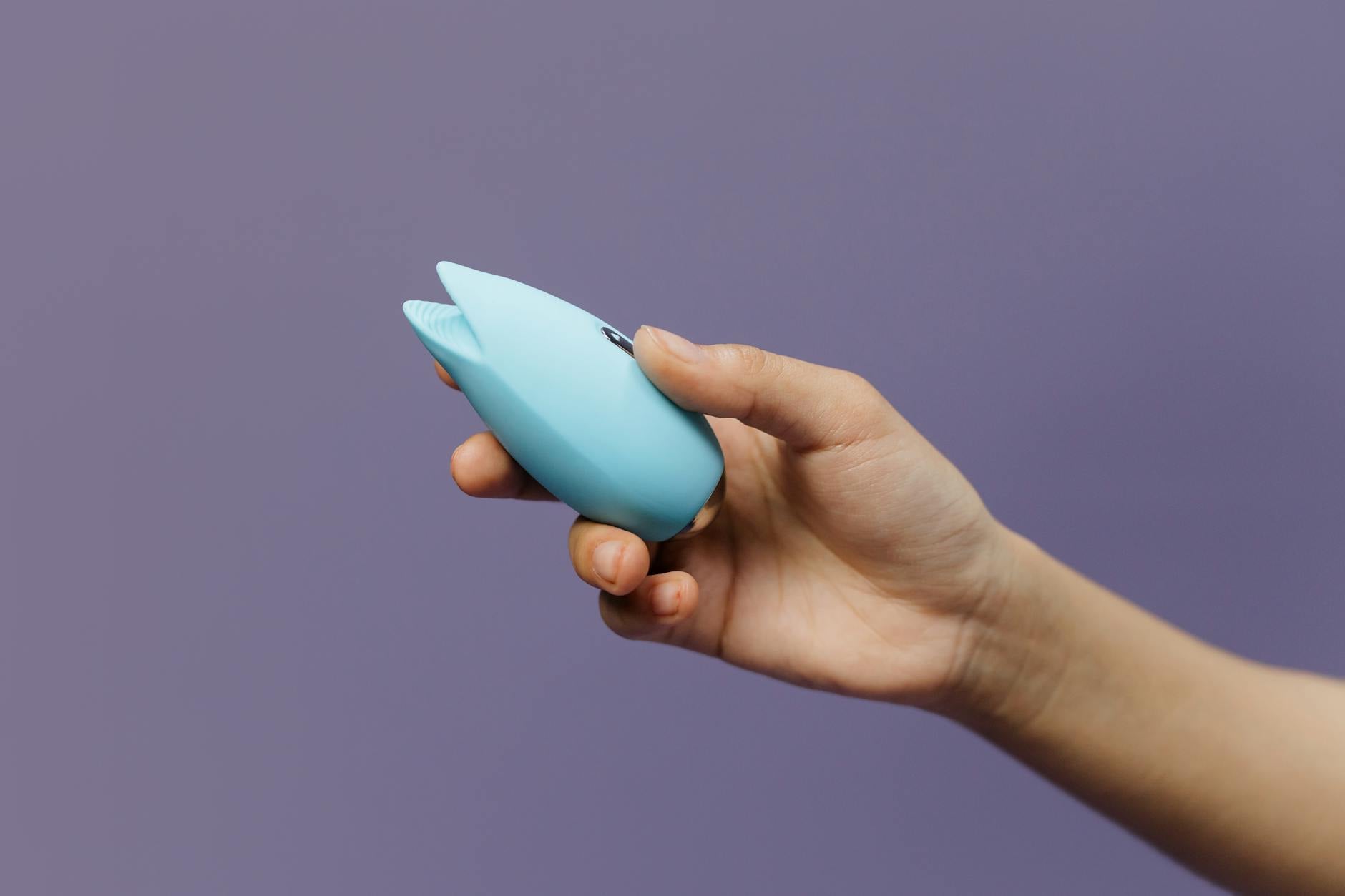
Lemon clitoral vibrators like the Lem use suction and pulsation patterns that work with your nervous system rather than against it. Unlike traditional vibrators that require you to build arousal from near-zero, the Lem's pattern does some of that work for you. That matters enormously when anxiety is present.
Here's why: when you're anxious, your arousal threshold is higher. You need more stimulation to trigger the cascade. Lemon vibrators deliver consistent, intense stimulation to the clitoris without requiring you to generate momentum yourself. They bypass some of the mental load.
But the real magic is psychological. A clitoral vibrator gives you permission to prioritize your pleasure separate from your partner's presence or performance. That separation is healing. It tells your nervous system: I can feel good. My body still works. I still deserve pleasure even when things are uncertain.
That's not selfish. That's the opposite of what anxiety tells you.
Three ways to use lemon vibrators to rebuild intimacy
1. Solo first, then together. The scariest moment in a relationship with anxiety is initiating sex or intimacy. There's too much meaning attached. Start alone. Give yourself permission to explore pleasure without the pressure of your partner's response. Once you remember what your body is capable of, bring your partner in.
Try this: use your lemon vibrator solo for a week. Notice what patterns feel good. What speeds, what rhythms. Then, with your partner, show them. Let them watch. There's something profoundly reconnecting about saying "Here's what I like. Here's what my body needs." It's vulnerable in the best way.
2. Use it as a bridge during partnered sex. If you're having trouble reaching orgasm with your partner due to anxiety, a clitoral vibrator isn't a failure. It's a tool. Many couples find that using a lemon vibrator during partnered sex actually increases intimacy. Your partner sees you experience pleasure. They feel less pressure to be the sole source. You get to relax.
This removes so much shame from the equation. Instead of "I can't come," it becomes "Here's how we both get to enjoy this."
3. Make it a conversation starter. Bringing a lemon clitoral vibrator into your relationship can open up a completely different dialogue. Instead of fighting about sex or avoiding it, you're saying: I want to feel good. I want us to reconnect. I need your help.
That's conversation, not avoidance. Relationship anxiety thrives in silence. It dies in honesty.
The nervous system piece (why this matters more than you think)
When you use a clitoral vibrator while anxious, something shifts in your vagus nerve, the primary highway of your parasympathetic nervous system. As pleasure builds, your vagus activates. That's the "rest and digest" branch. It's the opposite of fight-or-flight.
Orgasm actually resets your nervous system. It's one of the few activities that forces your body out of anxiety mode and into a moment of complete surrender. That reset has downstream effects. You feel calmer. You think more clearly. You're less reactive to your partner.
That's not just feel-good biology. That's a genuine healing tool.
When you need to talk to someone else too
Lemon vibrators are powerful, but they're not therapy. If your relationship anxiety is rooted in genuine trust issues, repeated conflict, or unresolved attachment wounds, a clitoral vibrator won't fix that alone.
What it does is create space and safety for other conversations to happen. It reminds your body that pleasure is possible. It gives you a moment of autonomy and agency in a relationship that might feel out of control.
If the anxiety is severe, couples therapy or individual therapy is worth considering. A professional can help you understand where the anxiety comes from and whether it's about your specific relationship or a pattern you bring to all relationships.
But here's what I know from decades of working with couples: most relationship anxiety softens when both people feel genuinely desired and when sexuality isn't weaponized or avoided. A lemon clitoral vibrator removes a lot of the loaded meaning around sex. It says: this is about pleasure, not performance. About connection, not proof.
The invitation
If you're in a relationship and anxiety is stealing your intimacy, start here. Get curious about what your body actually needs. A lemon vibrator is just an object. But the permission it gives you, the space it creates, the conversation it opens.
That's where healing starts.
People also ask
Can using a vibrator hurt my relationship?
Not if you're honest about it. The couples who struggle are usually the ones who hide it or use it as a substitute for connection. The couples who thrive are the ones who say "I want to feel good, and I'd like to share this with you." Bringing a clitoral vibrator into your shared life is an act of intimacy if you frame it that way.
How do I talk to my partner about using a lemon vibrator?
Start with honesty about why. "I've been feeling anxious about us, and I want to reconnect with my body. I'd like your support." That's so much more effective than surprise introducing a toy. Give your partner context. Make them an ally, not an outsider.
Does using a vibrator mean I'm not attracted to my partner anymore?
No. Anxiety doesn't live in attraction. It lives in safety. You can be deeply attracted to someone and still have trouble accessing pleasure because your nervous system is in protection mode. The vibrator helps your body feel safe enough to receive pleasure. That actually deepens attraction over time.
How often should I use a lemon clitoral vibrator if I have relationship anxiety?
As often as feels good. There's no schedule. Some people use it daily when anxiety is high. Others use it a few times a week. The goal isn't frequency. It's reconnection with your own pleasure. Solo use or partnered use, whatever serves your healing.
What if my partner is uncomfortable with vibrators?
That's worth exploring. Often discomfort comes from insecurity ("Am I not enough?") or lack of information ("Isn't that weird?"). Have a real conversation. Share what you've learned about how your nervous system works. Offer to use it together. Sometimes watching changes everything.
Can a lemon vibrator replace couples therapy?
No. But it can open the door to better conversations and physical reconnection while you're doing the deeper work. Pleasure and safety are connected. A vibrator helps your body feel safe. Therapy helps you understand why you lost that safety in the first place. Both matter.
What comes next
If relationship anxiety is dimming your intimacy, you deserve to feel good again. That might look like a lemon clitoral vibrator, a conversation with your partner, therapy, or all three. Start with what feels most true right now.
Your body remembers pleasure. Your relationship can remember too.
Have questions about how to navigate this? Reach out. That's what we're here for.