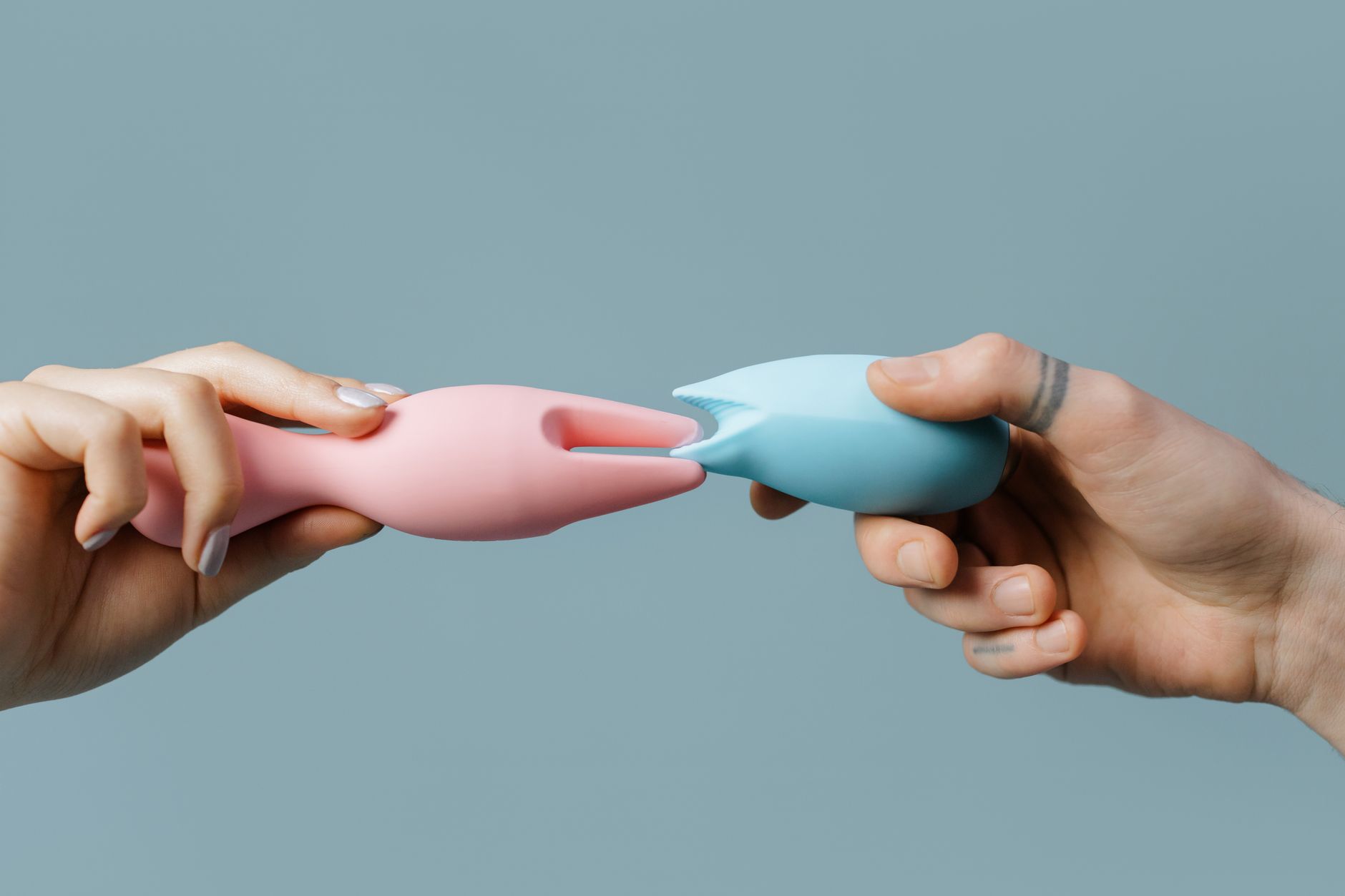
The honest truth about sharing your pleasure
If you've ever used a lemon vibrator alone and then with a partner, you already know something shifts. It's not the toy. The vibration pattern, the intensity, the physical sensation of suction is identical. What changes is everything else: your nervous system state, your attention, the feedback loop between bodies, the permission you give yourself to make noise and take time.
Here's what I see in my practice over and over. People assume the difference is about arousal or desire. It's usually about context, safety, and the subtle pressure of being watched.
Why solo feels completely different
When you're alone with a lemon clitoral vibrator, there's zero performance happening. Your body isn't calibrating someone else's response. You're not managing their comfort, their pacing, their expectations. You can restart five times. You can stop mid-orgasm because you want to stretch it out. You can take eighteen minutes or two minutes. The pleasure exists in a private bubble.
This matters neurologically. Your parasympathetic nervous system (the one that generates pleasure and allows orgasm) functions best when you feel completely safe and unobserved. Being alone is the ultimate safety condition. Many people find that solo sessions with a lemon vibrator produce the most intense, sustained orgasms of their entire week. That's not a weakness in your partnership. That's biology.
There's also something about self-directed pleasure that changes the experience at a psychological level. You know exactly what you want and you deliver it to yourself without negotiation. You're not waiting for a partner to notice you need something different. You're not timing your pleasure to someone else's readiness. That autonomy alone can make sensations feel sharper, longer, and more satisfying.
What happens when a partner is involved
Add another person into the room and nearly everything shifts except the toy itself.
First, arousal patterns change. If your partner is engaging with you (watching, touching you separately, narrating, asking what you want), your nervous system is processing two simultaneous inputs. Your clitoris is receiving stimulation from the lemon vibrator while your brain is also responding to your partner's attention, voice, presence. That's not better or worse. It's just different. Some people find it more intensely arousing. Others find it slightly distracting at first.
Second, there's a tempo negotiation happening whether you name it or not. You might slow down because you want them to follow the rhythm of your pleasure. You might speed up because you sense they're getting restless. You might have a stronger orgasm because you know they're fully focused on you. Or you might hold back slightly because some part of you is still managing their experience. These micro-decisions happen below consciousness, but they're real and they shape the sensation.
Third, permission changes. Many people report that using a lemon sucker or clitoral vibrator with a partner in the room actually reduces their pleasure, at least initially, because there's residual shame or self-consciousness. You might feel vulnerable in a new way. You might worry about how you look, sound, or how long you're taking. That's not a reflection of your partner. It's usually an internalized cultural message about women's pleasure that shows up in couples' contexts.
The partner variable that matters most
Honestly, whether partnered use of lemon vibrators feels good depends almost entirely on one thing: does your partner view your pleasure as part of their pleasure, or as something they need to facilitate or tolerate?
If they're genuinely interested in your arousal, your satisfaction, the specific vibrations that work for your body, then adding them into the room often enhances everything. They become part of the context in a way that feels supportive rather than scrutinizing. You can relax into the sensation instead of managing their feelings about it.
If there's even low-level resentment, boredom, or the sense that they're doing you a favor, you'll feel it. Your body will sense it. Your orgasm might become harder to access, shorter, or less satisfying. This is where communication becomes the actual sex toy. Before you invite a partner into this experience, make sure you've named what you both want from it.
Practical shifts when using a lem vibrator together
If you're interested in partnered lemon vibrator use and want it to feel genuinely good, here are the changes worth making.
Give yourself a warm-up period alone first. Ten to fifteen minutes with the lemon clitoral vibrator solo helps your body reach a baseline arousal state. Then your partner joins and there's no catching up needed. You're already in the experience.
Name what you want your partner to do. "I want you to watch and touch me elsewhere" is different than "I want you to leave the room but stay nearby so I know you're here." Different again from "I want you holding me while I use it." Guessing kills the mood.
Remember that rhythm might slow down. When you're alone, you might reach orgasm in six minutes. With a partner, the same lemon vibrator might take twelve. That's not dysfunction. That's just the nervous system working with two inputs instead of one. Plan for it.
Your orgasm doesn't have to be their finale. Some couples think partnered vibrator use means the lemon sucker comes out right before penetrative sex. But you might want to have your full pleasure experience, rest, and then decide if you want something else together. Don't let the toy become a stepping stone to the "real" sex.
When solo is actually more intimate
I want to push back gently on the idea that partnered pleasure is automatically more intimate or more important than solo pleasure. It's not. It's different.
Many of my clients find that using their lemon vibrator alone, knowing their partner respects and supports that, feels deeply intimate. The vulnerability of pleasure, even solitary pleasure, can deepen a relationship. Some couples use solo vibrator time as a way to recover desire, to remember what arousal feels like, to reconnect with their own bodies.
Then they come back to their partner refreshed, less resentful, more interested. That cycle is healthy. Partnered pleasure isn't the only goal.
The sensations that actually change
If you're paying close attention, the physical sensations shift when context shifts. Alone, orgasms sometimes feel more localized and intense. With a partner, they might feel more full-body because you're receiving stimulation from multiple sources (the lemon clitoral vibrator, their hands, their attention, the intimacy).
Alone, you might prefer a specific intensity setting. With a partner, you might want to start lower and build higher because the shared experience is part of the turn-on. The toy is the same. Your body's response is adapted to context.
Some people find that lemon vibrators feel more satisfying solo because there's less adjustment needed. Others find that the vulnerability of using one with a partner they trust actually deepens the sensation. Neither is correct. Your experience is what matters.
The conversation before the experience
If you're thinking about inviting a partner into your solo lemon vibrator practice, the conversation is as important as the toy. Talk about what you each want the experience to look like. Talk about what feels vulnerable. Talk about what would make you feel safe and focused on pleasure instead of performance.
That conversation might feel awkward. Do it anyway. The pleasure on the other side of that awkwardness is worth it.
FAQ: Solo vs. Partnered Pleasure With Lemon Vibrators
Is it normal to have better orgasms alone with a lemon clitoral vibrator than with a partner?
Completely normal. Your parasympathetic nervous system functions differently in solo contexts. There's no performance pressure, no external timing to adapt to, and no other body to manage. Many people have their most intense orgasms when alone. That's not a relationship problem. It's a nervous system fact.
Does using a lemon vibrator with a partner mean I don't want them enough?
No. Introducing a toy is often a sign that you want to expand the pleasure available to you together. It doesn't mean the partner isn't enough. It means you're interested in variety, intensity, or sensation that a toy provides. Different doesn't mean lacking.
How do I know if my partner is actually comfortable with me using a lemon vibrator around them?
Ask directly. Not in a vulnerable moment. Pick a conversation time when you're both clothed and not already aroused. "I've been thinking about using my vibrator when we're together. How do you feel about that?" Listen to the substance of the answer and the tone. If they say yes but sound uncertain, follow up. Most discomfort comes from not knowing what's expected, not from the toy itself.
Can we use a lemon vibrator together if I've never had good partnered sex?
Yes, but manage expectations. The toy won't fix communication problems or unresolved intimacy issues. If you struggle with pleasure together in general, a lemon clitoral vibrator is an addition to work you've already done, not a replacement for it. Consider talking to someone like me (a therapist who works with couples) before adding a toy into a struggling dynamic.
Why does my lemon vibrator feel different on certain patterns when my partner is watching?
Your arousal state changes based on context. If you feel safer or more turned on with a partner present, your clitoris might swell differently, making the vibration sensation more intense or localized. If you feel slightly self-conscious, your body might tense slightly, changing how the sensation registers. The toy is the same. Your nervous system's response isn't.
Should I always tell my partner before I use my lemon vibrator alone?
That depends on your relationship agreements. Some couples share everything related to pleasure. Others have private sexual time they don't narrate. Both are fine as long as you've named it together. The key is not hiding it out of shame, but honoring whatever privacy agreement you've made.
The real truth is this: a lemon vibrator is a tool that adapts to your context. Alone, it's a direct line to your own pleasure. With a partner, it's a conversation tool, a pleasure amplifier, a vulnerability practice. Both matter. Neither is the end goal. What matters is knowing yourself well enough to use it in whichever way serves you right now.