
How Lemon Vibrators Feel Different When Using Them With a Partner
Here's the thing about introducing a clitoral vibrator into your partnered sex life: it's not really about the toy. It's about what the toy forces you to talk about.
Most couples don't actually discuss pleasure in specific terms. You have sex, things feel good or they don't, and you move on. A vibrator, though, demands conversation. And that conversation, awkward as it might feel at first, is where everything changes.
The honest truth about toys and couples
Let's address the thing nobody says out loud. Some partners worry that introducing a toy means they're not enough. That's not a reflection of reality, it's a reflection of insecurity. A lemon clitoral vibrator doesn't replace your partner. It does something different than a partner can do. Your hand, mouth, and body offer intimacy and connection. A vibrator offers sustained, consistent stimulation at speeds your body alone can't produce.
Think of it this way: you don't stop cooking because restaurants exist. Both serve a purpose.
Most of the couples I work with find that adding a vibrator actually deepens their sexual connection, not weakens it. The reason has nothing to do with the toy and everything to do with what comes before you use it. You have to negotiate. You have to ask for what you want. You have to be vulnerable about desire.
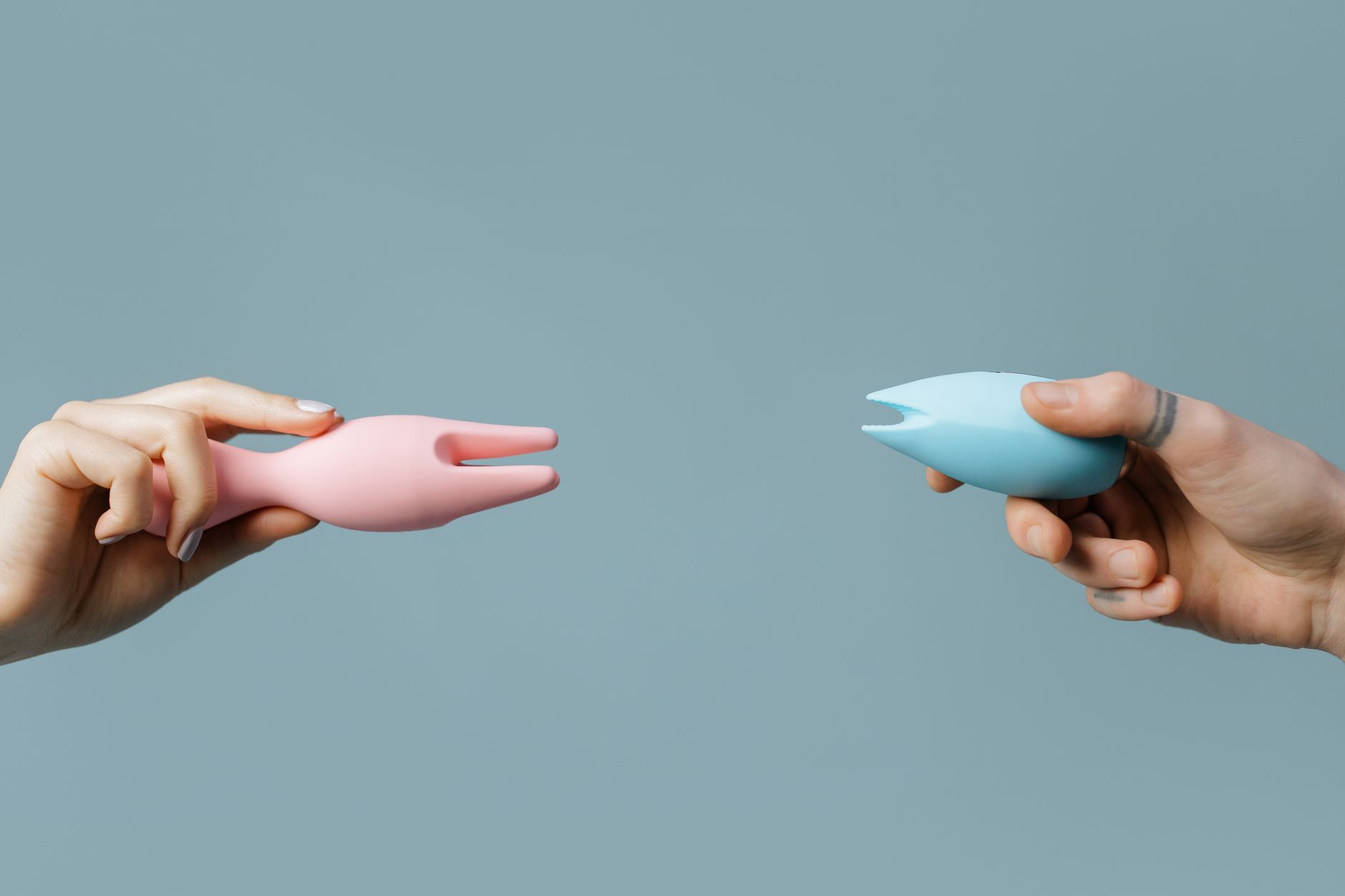
Photo by cottonbro studio on Pexels
What actually changes when you bring a toy into partnered sex
Four major shifts happen.
First, sensation feels different because you're not doing all the work. Your partner can now use their hands, mouth, or body on other parts of you while the vibrator handles clitoral stimulation. Many people describe this as liberating. Instead of choosing between penetration and clitoral stimulation, you can have both. Instead of needing a partner to be in exactly one position to keep the right friction, you have freedom to move.
Second, the dynamic changes. Sex suddenly isn't about simultaneous arrival. One of you might use the vibrator while the other receives, or you might both be stimulating each other in different ways. This removes the invisible pressure that's been present in most partnered sex since you started having it. That pressure, by the way, is why so many people don't orgasm with partners even though they easily do alone.
Third, communication becomes non-negotiable. Before a toy enters the picture, you can kind of fumble through. With a vibrator involved, you have to say things like: "I want the vibrator on the left side of my clitoris" or "Can you angle it differently" or "Actually, I want you inside me while I use this." These specific requests sound clinical when you first say them. They feel weird. After about sixty seconds, they become incredibly sexy because they're honest.
Fourth, your own pleasure matters differently. Solo masturbation and partnered sex have always felt separate for most people because the goal in partnered sex is often implicit: mutual pleasure, simultaneous climax, or at least the performance of desire. A vibrator in the room makes your solo pleasure visible and legitimate. Your partner is watching you use it. They're participating in facilitating your pleasure. That's a massive psychological shift.
How to actually introduce this without the awkwardness
Timing matters more than you'd think.
Don't introduce a lemon vibrator for the first time during sex when things are already intense. That's too much novelty at once. Instead, bring it up outside the bedroom, when you're both clothed and the stakes feel lower. "I've been thinking about trying a vibrator together" is all you need to say.
If your partner seems hesitant, the conversation isn't really about the vibrator. It's about one of three things: they're worried they're not enough, they think vibrators mean you're not satisfied, or they're uncomfortable with you having explicit pleasure. Only the first one is actually solvable with reassurance. The other two need deeper conversation, and honestly, those are worth having regardless.
When you're both on board, use the vibrator alone first. Not secretly. Show your partner what you enjoy. Let them see what intensity you prefer, what patterns work, where you like the stimulation. This removes the mystery and makes it less performative when you use it together.
Then, the first time together, keep it simple. Don't add it during the most complicated part of your usual routine. Maybe start with foreplay, use the lemon vibrator while your partner touches you elsewhere, and see how it feels. You're not trying to have the best orgasm of your life. You're just gathering information about what works.
The sensation piece nobody talks about
When a partner is present while you use a clitoral vibrator, the experience is genuinely different than when you're alone.
For some people, it's intensely intimate. Your partner is literally watching you experience pleasure. That visibility can feel vulnerable in ways that are actually healing. For others, it's distracting. You're hyper-aware of their presence, and that awareness dampens arousal. Both responses are normal.
The vibration intensity often feels stronger when a partner is involved, possibly because you're less in your own head and more in your body. Conversely, some people find they need higher intensity because the mental distraction of being watched actually requires more physical sensation to reach the same level of arousal.
Organ timing also shifts. Because the vibrator is consistent and your partner can focus on other types of stimulation, many people orgasm faster together with a toy than they would alone. Some people orgasm multiple times, which doesn't always happen in solo play. Some people struggle to orgasm at all because the psychological element of being watched interferes. Again, all normal.
The communication patterns that actually work
Here's what I recommend: establish a basic language before you start.
You might say: "If I want you to change how you're using it, I'll say 'higher' or 'softer' or 'different pattern.' If I want you to stop, I'll say 'stop.' If I'm close to coming and I don't want anything to change, I'll say 'keep going."' This sounds mechanical, but it removes the guessing game.
During sex, people often assume their partner can read their mind. With a vibrator involved, that assumption becomes untenable. You actually have to direct what happens. Some couples find this awkward. Others find it's the first time they've ever felt like an active participant in their own pleasure.
After sex, check in. "That felt good" is a starting point. "The angle was perfect when you tilted it like that" is more useful feedback. Over time, you learn what works, and it becomes less like giving instructions and more like a conversation you both understand.
When a lemon vibrator changes the relationship
I've worked with couples who brought toys into their sex life thinking it would add excitement to an already-healthy sexual dynamic. Instead, they discovered their sexual dynamic wasn't actually that healthy. They weren't communicating. They weren't prioritizing each other's pleasure. They were having dutiful sex.
The vibrator forced honesty. And that honesty, as uncomfortable as it was, rebuilt the relationship.
I've also worked with couples where sex was painful or non-existent, and a clitoral vibrator gave them an entry point to pleasure that bypassed whatever was blocking them. Sometimes it's physical. Sometimes it's emotional. Often it's both. A vibrator doesn't fix dysfunction, but it can reveal what's actually wrong instead of just making it worse.
The couples who get the most out of partnered vibrator use are the ones who view the vibrator not as a sex enhancement tool, but as a communication device. It's permission to talk about what you want, what feels good, and what you actually desire instead of what you think you should desire.
If you're just starting
The barrier to entry is lower than you'd think. You don't need a complicated toy. Many couples find that starting with something simple, like the Lem, works better than reaching for something fancy. The Lem is intuitive, quiet enough that you can actually hear each other, and the suction sensation is distinct enough that you'll both notice it immediately.
Start a conversation. See what your partner says. If they're open, move into the actual shopping and usage. If they're resistant, ask why. That answer will tell you something true about your relationship that deserves attention anyway.
A clitoral vibrator in partnered sex isn't about fixing anything. It's about expanding what's possible.
People also ask
Will using a vibrator with my partner make them feel inadequate?
Not if you've had the conversation first. The insecurity is usually present before the vibrator arrives. If your partner is already secure in the relationship, a vibrator is just a tool. If they're insecure, a vibrator can trigger it, but the vibrator didn't create the insecurity. The real work is addressing why they feel they need to be everything to you sexually. That's a conversation about partnership, not about toys.
How do I use a lemon clitoral vibrator during penetration?
Most couples hold the vibrator against the clitoris while one partner penetrates. The angle matters. Some people prefer the vibrator on top, some prefer it from below, some prefer it on the side. It depends on the position you're in and your anatomy. Start with missionary or spooning because those positions give you the most control over where the vibrator sits.
Can we use a lemon vibrator if we're long distance?
Yes, though the experience is different. You're using it solo while video calling or messaging with your partner. It's intimate in a different way. Some couples find it actually strengthens their connection because the focus is entirely on pleasure and communication rather than on simultaneous physical sensation. For longer-distance advice, you might also explore how other couples navigate this in our piece on using lemon vibrators during long-distance relationships.
How do I know if my partner will be open to using a vibrator?
You ask. Seriously. Not during sex, not in the moment, just in conversation. If you're not comfortable asking your partner about sex toys, you probably have a bigger communication issue that a vibrator will expose. Use it as an opportunity to get more comfortable talking about desire, not as a test of whether they're the "right" partner.
Is it better to use a vibrator alone first or together first?
Alone first is generally easier. You learn what you like without performance pressure. Your partner also gets to see what you enjoy, which removes mystery and makes the first partnered experience less awkward. If you bring a vibrator into partnered sex with zero solo experience, you're introducing too many new variables at once.
Can we use a vibrator if one of us has less interest in sex?
Sometimes yes. A vibrator can make sex feel less like a performance and more like mutual pleasure, which can actually interest the lower-desire partner more. But it depends on why the desire is lower. If it's medication, stress, or hormonal, a vibrator might help create better conditions for sex to happen. If it's relationship issues or a medical problem, a vibrator won't fix that. Consider talking with someone like how lemon vibrators help when you have low libido from stress or exploring whether other underlying factors need attention first.
The shift from solo to partnered vibrator use is subtle but significant. You're not just adding a toy to your sex life. You're making pleasure visible, making communication necessary, and making your own sensations matter in a way they might not have before. That's worth the initial awkwardness of the conversation. Most couples find that what starts as nervousness becomes some of the most connected sex they've ever had.
If you're ready to explore this with your partner and want more guidance on navigating the emotional side of introducing new intimacy practices, I'm here to help. Get in touch at /contact.