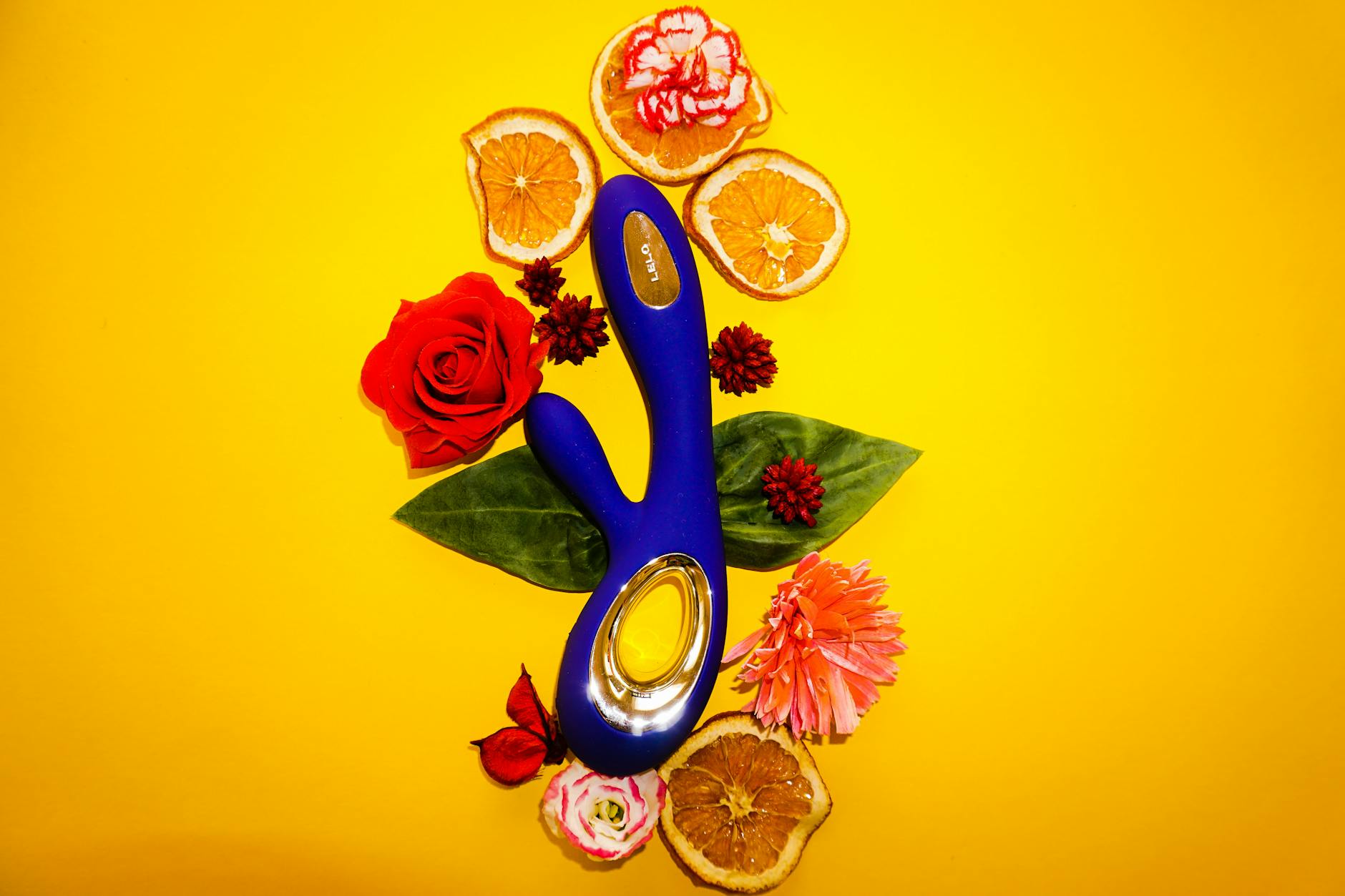
How Lemon Vibrators Feel Different When You're in Your Fifties
Let's be real. Your clitoris at fifty is not your clitoris at twenty-five. The tissue is different. The blood flow is different. What gets you there takes longer, and sometimes feels completely different once it does.
But here's what nobody tells you: different does not mean worse. For most people, fifties pleasure is richer, more focused, and way less complicated by the noise of earlier decades.
The physical reality of sensation in your fifties
Your vulva has thinned slightly. Estrogen has been on a slow decline for a few years, even if you haven't hit full menopause yet. The skin is more delicate, which sounds fragile until you realize it also means fewer layers between stimulation and nerve endings. In some ways, you're more sensitive, not less.
What does change: arousal takes longer to build. Your fifties self might need fifteen to twenty minutes of foreplay or warm-up where your thirties self needed five. This is not a flaw. This is actually your nervous system asking for something deeper.
Blood flow to the vulva is slower too, which means the clitoris engorges more gradually. But when it does? The sensation is often more sustained, more concentrated. A lemon vibrator's suction mechanism works beautifully with this shift because it creates steady, consistent stimulation without requiring the rapid intensity that friction-based toys sometimes demand.
Why a lem vibrator changes things
The lemon clitoral vibrator is engineered with air-pulse technology, not vibration. This matters hugely in your fifties. Here's why.
Traditional vibrators buzz against tissue. At fifty, that constant micro-impact can feel scattered or even slightly irritating if your skin is more sensitive. The lem's suction approach does something different. It gently pulls tissue into the cup, then releases, in a rhythmic pattern. You're feeling waves of pressure, not percussion.
For people in their fifties, this often translates to orgasms that feel deeper, more diffuse through the pelvis, less sharp. Many of my clients describe it as "more of me gets to feel it," which is exactly what's happening neurologically. The sustained pressure activates more of the pelvic nerve network instead of just the local clitoral nerves.
The arousal shift and what to do about it
Your fifties brain is busier. You're managing adult children, maybe aging parents, work stress, relationship shifts. The mental load is real, and it absolutely affects blood flow to the genitals. You can't arousal your way past a full cortisol tank.
This is where the lemon sucker's ease of use becomes almost therapeutic. You don't have to think about technique. You don't have to generate momentum or maintain a certain pressure. You turn it on and let the device do the work, which means your nervous system can actually relax into sensation instead of performing it.
Many women in their fifties tell me they've spent thirty years calibrating their pleasure to fit someone else's timeline or expectation. By fifty, you finally get permission to take what you need. That permission shift alone changes everything.
Lubrication and comfort at this stage
If you're perimenopausal or postmenopausal, you probably already know lubrication matters more. If you're in that fifties window where hormones are shifting but not fully gone, the texture of your lubrication changes. It gets thinner, less slippery.
The good news: lemon vibrators work better with minimal external lubricant than vibration toys do. The suction creates its own seal, which means you're not relying on natural lubrication to reduce friction. You can use a water-based lube if you want extra comfort, but it's not a requirement for the device to work.
Many of my clients in their fifties actually prefer dry or nearly dry use with a suction toy because the sensation is clearer, more defined. Your own body is the variable, so experiment. This is not a failure state. This is discovery.
The partner conversation you might need
If you're in a long-term relationship, your fifties often bring a specific tension: your partner might not realize how your body has changed. They remember the old timeline, the old intensity, the old everything. And they're still operating on that blueprint.
A lemon vibrator can actually be a bridge here. It's not a replacement for them. It's a tool that lets you meet yourself halfway, which takes the pressure off them to somehow generate sensations your body isn't generating as automatically anymore. Once your partner understands that slower arousal and a different orgasm shape isn't about them, the sex often gets better.
What an orgasm in your fifties might actually feel like
Here's the thing nobody says out loud. Orgasms in your fifties often feel different from orgasms in your twenties. Sometimes sharper because there's less cushioning tissue. Sometimes deeper because your nervous system is more integrated. Sometimes more localized, sometimes more diffuse through your whole pelvis.
I had a client, fifty-three, who told me she finally understood what all the fuss was about. After thirty years of what she thought were normal orgasms, she had her first full-body release in her fifties using a lemon clitoral vibrator. She said, "I thought I knew what this was supposed to feel like. Turns out I was experiencing about 40 percent of the actual sensation."
That's common. Not universal, but common enough that you should know it's possible. Your fifties body is not your youth body. That doesn't make it worse. Sometimes it makes it infinitely better.
Pelvic floor work that actually helps
Your pelvic floor gets less support from estrogen at fifty. This is important because it affects both sensation and grip. Some people find orgasms feel shallower or less intense. Others find they have more control, which actually deepens sensation.
Pelvic floor therapy is not just Kegels. A good therapist (or a DIY approach using breathwork and gentle tension release) can help you find the sweet spot between engagement and relaxation. Your fifties pelvic floor needs less clenching and more intelligent release.
A lemon vibrator combined with good pelvic floor awareness often creates the best results. You're not fighting your anatomy. You're working with it.
Pleasure is actually simpler now
One of the truest things I see in my practice is this: people in their fifties have way less time for complicated nonsense. You're not performing pleasure. You're not trying to prove anything. You either want it or you don't.
That clarity translates into better orgasms. Your nervous system doesn't have to manage competing agendas. You can actually feel what's happening instead of monitoring how you look or sound or whether your partner is still interested.
The lemon vibrator is simple. On. Off. Three intensity patterns. No learning curve, no high-stakes technique. That simplicity is a feature, not a limitation.
When to talk to a doctor
If you're experiencing pain, dryness so severe that no lubrication helps, or completely absent arousal paired with other symptoms (fatigue, mood shifts), see a menopause-informed doctor. These are often fixable. Topical estrogen, systemic hormone therapy, testosterone, lifestyle changes—options exist.
But if sensation is just different, not absent? That's your fifties body, and most of the time, it's responding exactly as it should.
A note on pleasure and aging
Your fifties are not the end of your sexual timeline. For many people, they're the middle chapter where everything finally clicks. You know your body. You have permission. You have less patience for mediocre sex. That's not loss. That's clarity.
A lemon vibrator fits beautifully into this phase because it meets your body where it actually is, not where you think it should be. The suction mechanism, the multiple intensities, the ease of use—it's all calibrated for bodies that have lived five decades and earned the right to feel good.
People also ask
Why does arousal take longer in your fifties?
Blood flow to the genitals slows with age, hormonal shifts reduce tissue engorgement speed, and your nervous system naturally takes longer to transition into arousal mode. This is not a defect. Slower arousal often allows for deeper, more integrated sexual response. Many people find that giving themselves more time actually improves sensation quality rather than diminishing it.
Can you have good orgasms after fifty?
Absolutely. Many people report their best orgasms happen in their fifties or sixties. The sensation quality changes, but intensity and satisfaction often increase. You have more body awareness, less performance anxiety, and often a clearer sense of what actually feels good instead of what you think should feel good.
Do lemon sexual toys work differently on older bodies?
Yes. The suction mechanism is gentler on thinner tissue than vibration, blood flow changes mean arousal builds differently, and the need for sustained rather than rapid stimulation makes suction toys particularly effective. A lem vibrator's design actually suits fifties bodies beautifully—it's one of the rare toys that gets better, not worse, as your body ages.
Is natural lubrication supposed to decrease at fifty?
Yes, if you're in perimenopause or early menopause. Estrogen levels begin declining in your forties, which thins vaginal tissue and reduces natural lubrication. This is completely normal. Using a water-based lubricant is fine, but many people find suction toys require less external lubrication than friction-based toys, making them easier to use during this transition.
How do I use a lemon clitoral vibrator if I have sensitive skin?
Start with the lowest intensity pattern and spend a few minutes on direct contact before ramping up. Many fifties bodies actually benefit from less stimulation, not more. Suction toys like the lem typically feel gentler than vibrators on sensitive tissue because they create pressure rather than friction. You can also use a small amount of water-based lubricant if direct contact feels too intense initially.
Is it normal for orgasms to feel different at fifty?
Completely normal. Tissue changes, hormonal shifts, pelvic floor changes, and neurological aging all affect how orgasm feels—sometimes sharper, sometimes deeper, sometimes differently distributed through the pelvis. This is not a problem to solve. It's your body's natural evolution, and learning to experience these new sensations is often when sex gets genuinely good.