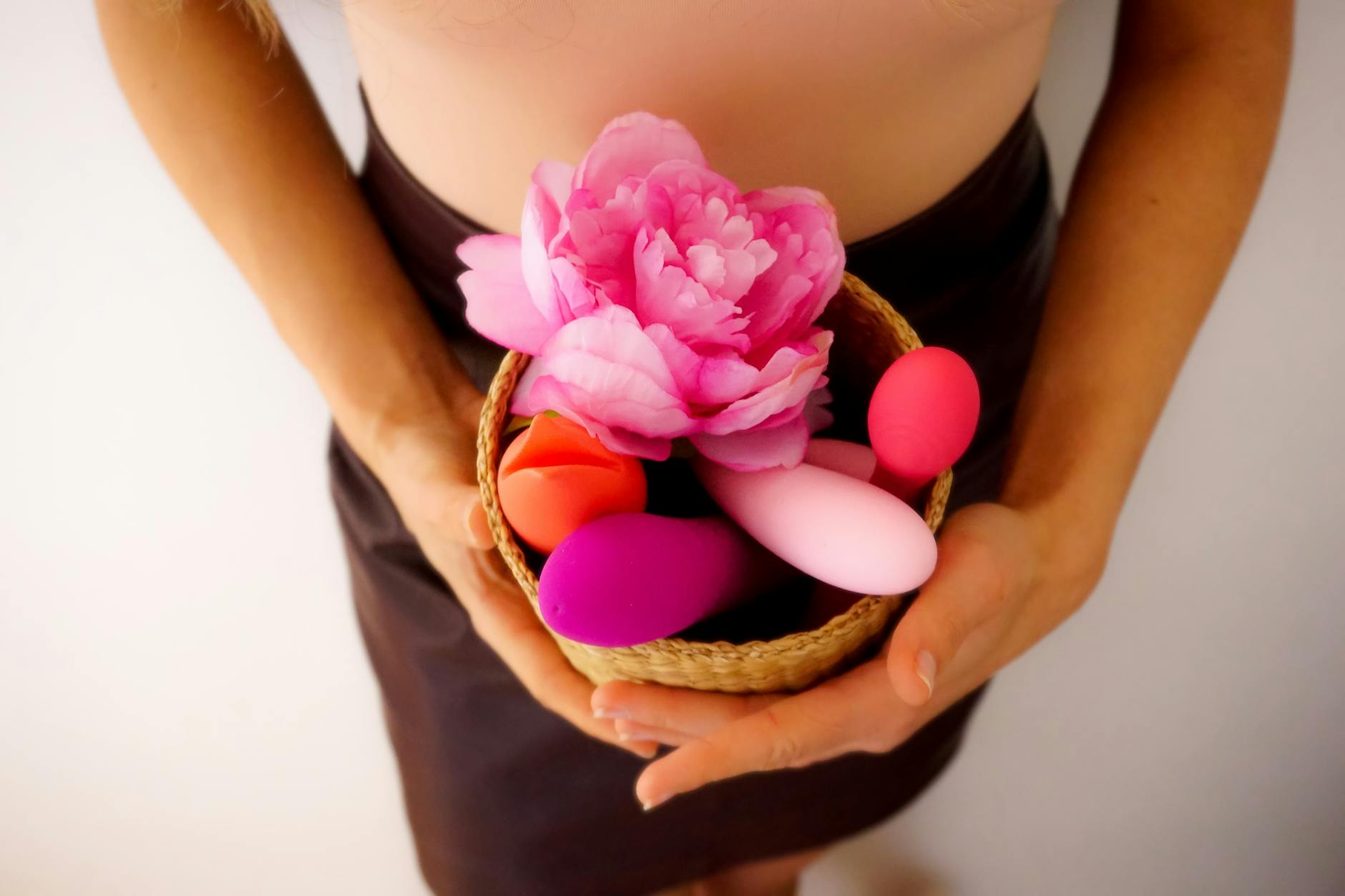
Your cycle changes your pleasure, and that's completely normal
Let's be real: if you think your pleasure should feel identical on day 3 versus day 17 of your cycle, you haven't been paying attention to your body. Estrogen and progesterone don't just affect your mood, energy, and bloating. They rewire how sensitive your clitoris is, how quickly arousal builds, and what kind of stimulation actually feels good.
Most people don't talk about this because sex toy conversations tend to pretend bodies are static. They're not. A lemon vibrator, unlike a traditional vibrator, gives you the flexibility to match your clitoral sensitivity to where you actually are in your cycle. Here's how.
The follicular phase: when sensitivity peaks
The first half of your cycle (roughly days 1-14) is when estrogen is rising. This is when your clitoris tends to be most sensitive and most responsive. Blood flow to the area increases, the tissues swell slightly, and nerve endings are more excitable. You might notice that stimulation feels sharper, more direct, more intense.
This is also the phase when many people report wanting more sensation overall. If you're thinking about trying a new toy, testing a higher intensity setting, or exploring something you've been curious about, the follicular phase is often the sweet spot. Your body is primed for it.
A lemon clitoral vibrator works beautifully here because you can start at lower intensities and gradually increase. The suction mechanism means you're not applying flat-faced vibration pressure (which can feel too intense during high-sensitivity phases). Instead, you're building sensation in a way that feels more like a wave than a jolt. Many people find they can reach orgasm faster during the follicular phase when using air-suction toys like the Lem.
The ovulation window: sensitivity plateaus then shifts
Right around day 14, ovulation happens. In the 12-24 hours before, estrogen peaks sharply, then drops just as quickly as progesterone begins to rise. What does this feel like in your body?
Often, a sudden shift in what feels good. You might hit a plateau where higher intensities feel better than the medium settings that worked days before. Or the reverse: suddenly what felt great feels too much, and you want something gentler. This window is short but noticeable for many people.
The advantage of a lemon vibrator here is that you have granular control. You're not locked into one intensity. If your sweet spot has moved, you can adjust between patterns 1-10 to match exactly where you are, instead of reaching for a completely different toy or powering through discomfort.
The luteal phase: progesterone changes the game
Once ovulation is past, progesterone takes over (days 15-28). This is a fundamentally different neurochemistry than the follicular phase. Progesterone is calming, grounding. It also makes your clitoris somewhat less sensitive. You might notice that the intensity that felt perfect a week ago now feels underwhelming.
This is not a problem. It's a signal. During the luteal phase, many people need more time to warm up, higher intensities to reach the same sensation, or longer sessions overall. Some people find they need or want partner involvement, more foreplay, or simply different framing (less performance-focused, more connected).
Here's where air-suction toys like the lemon clitoral vibrator shine: you can push the intensity higher without introducing the aggressive vibration that can numb tissue or feel jarring. Suction works by stimulating nerves along a deeper pathway than vibration does. This means you can increase intensity without increasing harshness. The sensation stays rounded and pleasurable even at higher settings.
The goal isn't the same orgasm every day of the cycle. The goal is learning what your body wants right now, and having tools that match that.
PMS and pain: when you might need to go lower
Days before your period, progesterone is at its highest. Some people experience cramping, pelvic floor tension, or general sensitivity during this window. If you usually enjoy the Lem at intensity 6-8, you might discover that intensity 3-4 feels better right now. Your nervous system might be more activated, or your pelvic floor muscles might be tighter.
The solution is not to stop using your lem vibrator. It's to match the setting to what your body needs today. If you're expecting intensity and get a signal that lower is better, listen to it. Pleasure during the luteal phase, especially during PMS, might look like extended warm-up time, lower intensity, more lubrication, and shorter sessions that feel luxurious rather than goal-oriented.
Spotting your personal pattern: a month-long experiment
Here's the thing: hormone responses aren't identical across people. One person's follicular peak might be someone else's ovulation cliff. The way to find your actual pattern is to pay attention over one full cycle.
Keep a simple mental note of what you notice: When does sensitivity spike? When does higher intensity feel better? When do you want your partner or toy involved? When do you prefer solo time? Do you crave longer sessions in one phase and quick ones in another? Are there days when you want the Lem and days when you'd rather do something else entirely?
After one cycle, patterns often emerge. After three, they're usually clear. Once you know your pattern, you can plan ahead. If you know the luteal phase calls for higher intensity, you're not scrambling when that phase arrives. You're ready.
Why lemon vibrators adapt better than traditional vibrators
A standard vibrator has one mode: vibrate. You can change the speed, sure, but you're still dealing with flat-faced oscillation against your tissues. During sensitive phases, this can feel overwhelming. During less sensitive phases, it can feel monotonous.
Air-suction toys like the lem vibrator work differently. The suction mechanism mimics the sensation of oral sex in a way that's neurologically distinct from vibration. This means the same intensity feels different depending on what you're responding to at that moment. Many people report that they can use higher settings on an air-suction toy than they'd use on a traditional vibrator without experiencing numbness or overwhelm.
Plus, when you're using a clitoral vibrator that relies on suction rather than vibration alone, you have more freedom with lubrication and positioning. You don't need to worry about the toy sliding around or the vibration canceling out. This matters during the luteal phase, when you might need to stay in one position longer to build sensation.
The pacing question: does timing matter
Short answer: yes. Many people find they reach orgasm faster during the follicular phase, need more time during the luteal phase, and experience the biggest shift right around ovulation. If you're using your lemon clitoral vibrator and notice it's taking longer than usual to reach orgasm, check your cycle. You're probably not broken. You're probably in a phase where your nervous system needs more setup.
Long answer: pacing also depends on your partner situation, stress levels, how present you can be, and what's happening in your life outside your cycle. Hormones are powerful, but they're not the only variable. If you're stressed or distracted during your follicular phase (when sensitivity should theoretically peak), you might still need extra time. The cycle is a guide, not a law.
Managing expectations across phases
One of the biggest shifts I see people make is releasing the idea that pleasure should feel the same all the time. Once you accept that your body is cyclical, using tools like lemon vibrators becomes less about fighting your biology and more about meeting it.
During the follicular phase, you might aim for intensity and speed. During the luteal phase, you might aim for depth and connection. Neither is better. They're just different. A lemon vibrator, because it offers both lower and higher intensity settings plus the suction mechanism that feels distinct from vibration, can be your constant companion through all those shifts.
How to start paying attention without overthinking
You don't need a fertility app, a spreadsheet, or a clinical mindset. Just notice: Does this feel the same as it did last week? Do I want the same thing? If the answer is no, cool. That's information. Write it down if you want, or just remember the rough timeline.
Three things that help: use your lemon vibrator consistently enough that you know what "normal" feels like at each setting, give yourself permission to adjust settings freely without judgment, and don't assume that reduced intensity or longer warm-up time means something is wrong. It means something is different. That's the point.
The reality of pleasure across your cycle
Your body isn't broken when sensation feels different. Pleasure isn't supposed to be a flat line. A lemon vibrator, with its adjustable intensity and air-suction mechanism, gives you the flexibility to honor those fluctuations instead of fighting them. You deserve a tool that adapts to your body, not a body that has to adapt to your tool.
Start where you are in your cycle right now. Notice how the Lem feels. Use the same setting for a week. Then pay attention as you move through different phases. You'll start seeing your own pattern emerge. Once you do, you'll have information that makes pleasure more intentional and more aligned with what your body is actually asking for.
People also ask
How much does clitoral sensitivity actually change during your cycle?
Clitoral sensitivity can shift by 20-40% depending on where you are in your cycle, though it's different for everyone. The follicular phase (days 1-14) typically sees heightened sensitivity due to rising estrogen, while the luteal phase brings lower sensitivity as progesterone dominates. Some people notice dramatic shifts; others experience more subtle changes. The only way to know your own pattern is to pay attention over at least one full cycle. A lemon clitoral vibrator makes this easier because you can adjust intensity to match whatever you're experiencing.
Do I need to change my lemon vibrator settings based on my cycle?
Not necessarily, but you might want to. Many people find that their ideal intensity setting shifts across their cycle. If you usually enjoy the Lem at intensity 5 during the follicular phase, you might prefer intensity 7-8 during the luteal phase to achieve the same sensation. Some people stay consistent; others prefer to adjust. The benefit of air-suction toys is that you have the option. Try staying at one setting for a full cycle, then experiment with adjusting across phases and see what feels better.
Why does everything feel more intense right before my period?
That's often your nervous system ramping up as progesterone peaks. Your pelvic floor muscles may also be tighter during PMS. This can make sensation feel sharper or more overwhelming, even at settings that felt comfortable earlier in your cycle. The solution is usually to lower intensity, take more time for warm-up, and use extra lubrication. It's not a sign that something is wrong; it's your body signaling what it needs right now.
Can I use my lem vibrator during my period?
Completely up to you. Some people find that using a lemon clitoral vibrator during their period feels amazing and can ease cramps. Others prefer to skip it. There's no rule. If you do use it during your period, you might notice you want lower intensity (similar to PMS). You might also find that the sensations feel different because of pelvic floor engagement and heightened nerve sensitivity. Experiment and go with what feels right.
Does the type of lubrication matter across my cycle?
Yes, slightly. During the follicular phase, when your body naturally produces more cervical fluid, you might need less additional lubrication. During the luteal phase, when natural lubrication drops, adding more helps. Water-based lubrication is safest with silicone toys like lemon vibrators. Avoid oil-based lubes, as they can degrade the material over time. Reapply as needed; it's not wasteful, it's smart.
What if my cycle-based pleasure patterns don't match what I read online?
Then you're normal. Pleasure responses to hormonal changes are wildly individual. Some people's follicular phase is a pleasure peak; others peak at ovulation or during the luteal phase. Some people barely notice cycle-related shifts. If you're not experiencing what you read online, that doesn't mean you're broken. It means your body has its own pattern. Track your own experience, not someone else's blueprint.
Want deeper support
Understanding your cycle is powerful. Understanding how to use that knowledge to deepen pleasure and connection is even better. If you're working with a partner and want to navigate these shifts together, or if you're noticing cycle-based patterns that feel confusing, reach out. I work with people on integrating pleasure awareness into their larger relationship and self-knowledge practice.