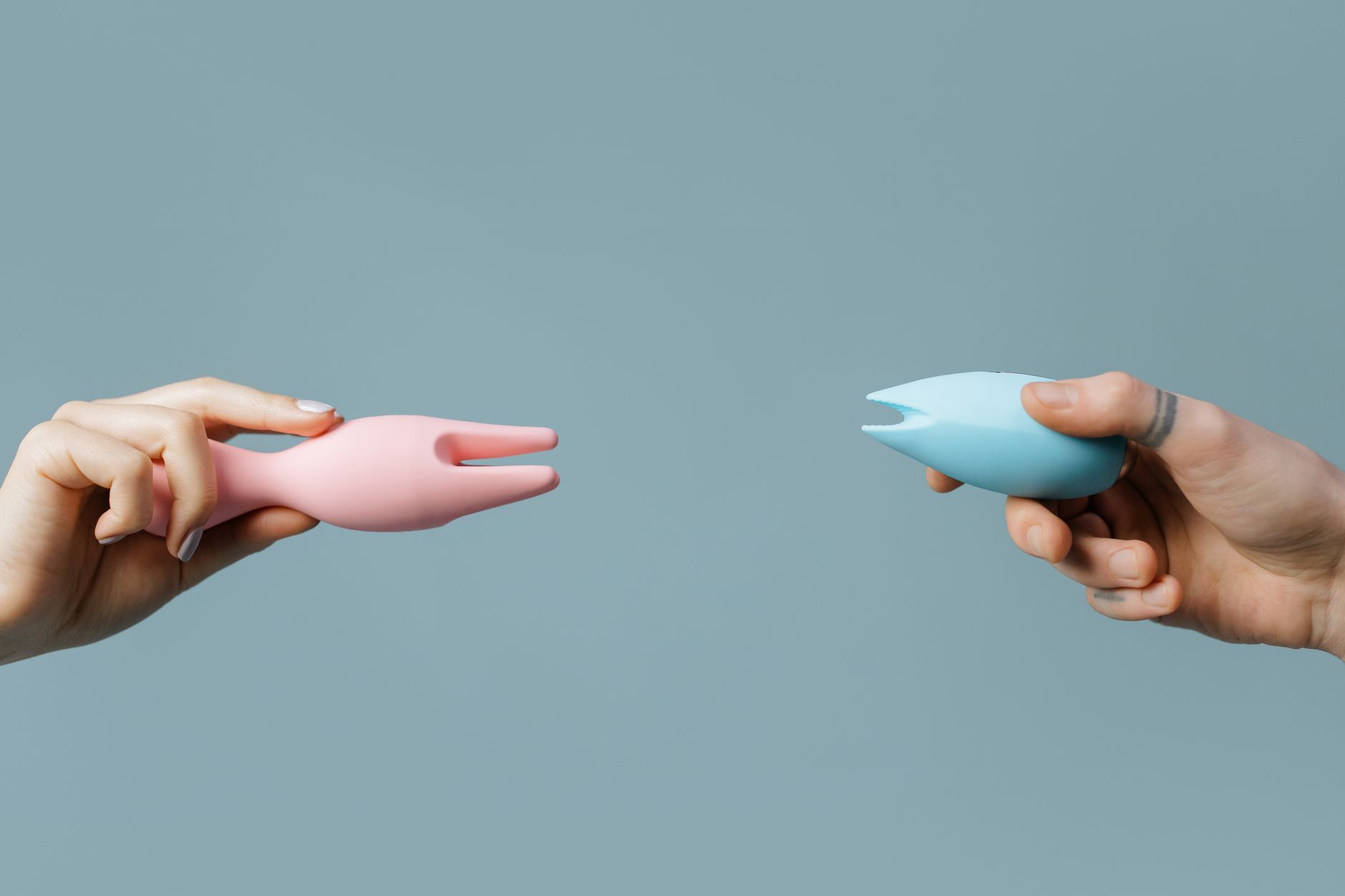
How to Use Lemon Vibrators When Sex Feels Uncomfortable or Numb
Let's be real. When sex stops feeling good, it's not just a physical problem. Your brain, your body, your sense of self in intimacy—all of it gets tangled up in the confusion. Numbness. Pain. The creeping feeling that your body has become a stranger.
Here's the thing that nobody tells you: sensation can come back. Pain doesn't have to be permanent. And one of the most practical tools for rebuilding both is something as straightforward as a lemon clitoral vibrator.
I'm not talking about getting "turned on" in the way magazines describe it. I'm talking about reconnecting your nervous system to your own body. Waking up nerve endings. Proving to yourself that pleasure is still possible. That's where lemon vibrators come in.
Why sensation goes missing (and when it's worth taking seriously)
Numbness and discomfort during sex don't arrive by accident. They show up for reasons: trauma, medication, hormonal shifts, depression, pelvic floor dysfunction, or sometimes just years of performance-based sex where you stopped paying attention to what actually felt good.
The nervous system has a backup plan. When something feels unsafe, threatening, or has hurt before, it dampens sensation as a protective measure. Your body isn't broken. It's protecting you. But here's the catch: once that protection kicks in, it's hard to switch off on demand.
Pain during sex is different. It can signal something medical that deserves a gynecologist's attention—things like vulvodynia, endometriosis, or residual tension in the pelvic floor. If pain is sharp, localized, or there during every attempt, talk to a doctor first. Don't skip that step.
Once you've ruled out anything structural, tools like lemon vibrators become genuinely helpful for the rewiring work.
Why lemon vibrators specifically help with numbness
Lemon-shaped clitoral vibrators work differently than traditional wand vibrators or internal toys. They use rapid suction and gentle pulse patterns that stimulate the clitoral complex without requiring you to feel comfortable with penetration or sustained direct friction.
That matters because when sensation is gone, the last thing you need is pressure to perform or intensity that feels like friction. Suction creates a different kind of stimulation. It's rhythmic, it's localized, and it engages the nervous system without the same aggressive pressure that can trigger pain memory.
The Lem vibrator, for example, uses patterns that build sensation gradually. You're not chasing an orgasm. You're teaching your nervous system that touch can feel safe. That's the entire goal.
The first time: how to actually start
If sex has felt numb or painful, your instinct might be to dive in and "fix it" fast. Don't. The rewiring happens slowly.
Start with your clothes on. Seriously. Hold the lemon vibrator through fabric. Let your nervous system get used to the vibration without the vulnerability of being naked. Use it on your inner arm, your neck, your thighs. Places that have never been fraught.
Turn it on the lowest setting. This isn't about intensity. It's about reconnection.
Spend 2-3 weeks just playing with it that way. No pressure to feel anything. No goal. If it feels good, great. If it feels neutral, that's fine too. You're building a new association between touch and safety.
Once that feels easy, move to skin-to-skin contact. Still clothed below the waist. Still low intensity. Explore what patterns feel good versus what feels too much. Your body will tell you.
The second phase: building actual sensation
After a few weeks of gentle, low-pressure use, you can start to get more intentional.
Lay on your back. Keep your underwear on at first. Use the lemon vibrator directly over the clitoral area through fabric. This gives you pressure without rawness. Set a timer for ten minutes. Your job is just to notice. Does this pattern feel rhythmic? Does this speed create anticipation?
Don't force arousal. Don't chase anything. Just pay attention.
Many people find that sensation starts returning around week four or five of regular, low-pressure use. It's not dramatic. It's a small tingle. A slight build. A sense that something is waking up.
That's the win. That's what you're looking for.
Once you feel some baseline sensation returning, you can gradually increase intensity. Move to skin contact. Spend longer. Notice what patterns create the most feeling. This is data collection, not performance.
When discomfort is still present
Some people find that sensation returns, but it comes with pain or hypersensitivity. That's actually common and it's workable.
If touch feels too intense, pull back to looser clothing between you and the toy. If specific patterns trigger discomfort, avoid those patterns. Your nervous system is learning what's safe. It gets to be picky.
Water-based lubricant helps even with external use. It reduces friction and signals to your nervous system that you're taking care of yourself. Use it generously.
If discomfort doesn't ease after 4-6 weeks of regular, gentle use, check in with a pelvic floor physical therapist. They can assess whether you have tension patterns that need hands-on help. That's not a failure. That's just the next right step.
The partner conversation (if there is one)
If you're doing this rewiring work with someone you're intimate with, they need to understand something: this isn't about them. It's not a judgment on desire for them or attraction. Your nervous system is processing something that has nothing to do with this person in this moment.
Tell them you're rebuilding sensation. Tell them you need them to not ask for sex while you're doing this work. Tell them you want them to know what you're doing so there's no mystery or rejection when you need solo time with a lemon vibrator.
The sexiest thing a partner can do right now is step back and trust the process. Many couples find that once sensation and pleasure return, everything shifts. But that happens on the other side of the solo rewiring work, not before it.
What usually happens next
Around week 6-8, most people notice something shifts. Not a lightning-bolt orgasm necessarily. But a genuine sense of "oh, I can feel this again." Pleasure starts returning in small, real ways.
That's when some people want to get adventurous. More intensity. Longer sessions. Maybe bringing a partner back in.
Go slow. You've been rebuilding for two months. Your nervous system is still learning. Keep using the lemon vibrator solo for another month or two even if pleasure is returning. You're not just getting sensation back. You're rewiring your brain's relationship to your own body. That takes time.
The bigger picture: why this matters
When sex becomes uncomfortable or numb, the rest of your relationship often feels it. You avoid touch. You feel broken. Your partner feels rejected. Resentment builds quietly.
Taking the time to rebuild sensation on your own terms isn't selfish. It's the most generous thing you can do for your relationship because you're saying, "I believe pleasure is possible again. I'm going to do the work to find it."
Lemon clitoral vibrators make that work concrete and manageable. You're not relying on willpower or hope. You have a tool. You have a plan. You have permission to move slowly.
Pleasure is supposed to return. Your body is designed for it. It just needs patience and the right approach.
Frequently asked questions
How long does it usually take for sensation to return when using lemon vibrators?
Most people notice some return of sensation around 4-6 weeks of consistent, gentle use. But real, reliable sensation usually takes 8-12 weeks. Everyone's timeline is different depending on what caused the numbness in the first place. Medication side effects, trauma recovery, and hormonal shifts all heal at different speeds. The key is regular, low-pressure use without expecting fast results.
Can I use a lemon vibrator if sex has been painful for years?
Yes, but start extremely slowly and consider working with a pelvic floor physical therapist in parallel. Pain that's been present for years often involves nervous system protection patterns that need professional support. A lemon clitoral vibrator can be part of the solution, but it's usually not the whole solution. Use it as a gentle tool while getting specialized care. Most people find that combining both approaches creates real change.
What setting should I use on a lemon vibrator when sensation is numb?
Start at the lowest setting available. The goal is not stimulation intensity but nervous system reconnection. Low settings create rhythm without overwhelm. Only increase intensity after 3-4 weeks when sensation starts returning and low feels genuinely boring. Many people find they prefer lower intensities even after sensation comes back because it feels more nuanced.
Does using a lemon vibrator alone make a partner feel abandoned?
Only if you don't talk about it. Tell your partner what you're doing and why. Frame it as rebuilding your capacity for pleasure with them, not replacement for them. Most partners actually feel relieved to understand what's happening instead of experiencing it as rejection. Couples who navigate this together often report deeper intimacy afterward because they've stopped performing and started actually connecting.
Can I use lemon vibrators if I'm on medication that affects sensation?
Yes, and many people find lemon clitoral vibrators particularly helpful because they compensate for medication-related numbness. If your antidepressant or blood pressure medication has flattened sensation, a lemon vibrator's suction pattern can bypass some of that dampening. Talk to your doctor about whether your medication is the main culprit. Sometimes adjusting the timing of doses or the medication itself helps. But while you're figuring that out, lemon vibrators absolutely work as a bridge tool.
What if pleasure returns but then disappears again?
That happens and it usually means something emotional is happening underneath. Sensation loss doesn't typically reverse itself randomly. If pleasure came back and then vanished, ask yourself what changed. Did stress increase? Did a relationship shift? Did trauma memories surface? Address the underlying factor, not just the symptom. Keep using your lemon vibrator but also consider talking to a therapist about what might be triggering the reversal.
Is it normal to feel nothing at all for the first few weeks?
Completely normal. Your nervous system has been in protection mode. It doesn't switch off overnight. For some people, the first three weeks feel like nothing is happening. Keep going anyway. You're building neural pathways. You're signaling safety. The sensation comes later. The key is consistency without expectation.
Rebuild your pleasure on your own timeline. Your body wants to feel good again. Sometimes it just needs patience and the right tool.