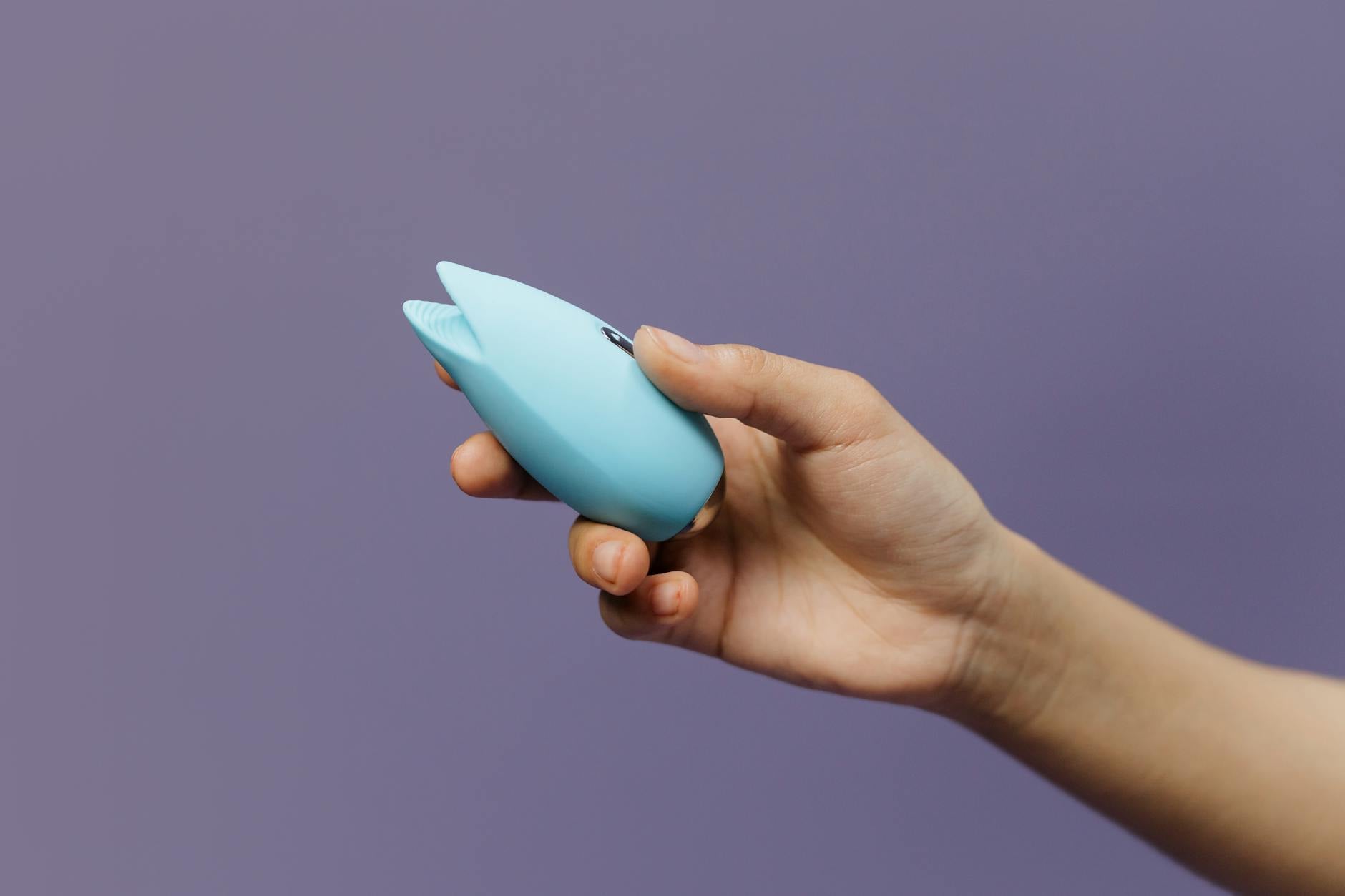
The nervous system doesn't know the difference between butterflies and red flags
When you enter a new relationship, your whole body is running on a different operating system. Your heart rate climbs faster. You're hyperaware of being touched. Sleep feels optional. This isn't romance magic. It's your nervous system in a state of heightened activation, and it changes absolutely everything about how pleasure feels.
This matters for how you experience any clitoral vibrator, especially a lemon vibrator. The same intensity setting that felt perfect last month might feel overwhelming now. Or it might feel dull. Or wildly arousing in ways you didn't expect. You're not broken. Your nervous system has just shifted gears.
What actually changes in your body when romance is new
Your autonomic nervous system has two modes: rest-and-digest (parasympathetic) and fight-or-flight (sympathetic). A healthy sex life usually lives in parasympathetic space, where you're relaxed enough to feel sensation deeply. New relationship energy flips you into sympathetic activation. You're constantly slightly activated, which sounds good but actually changes sensory processing completely.
When you're in sympathetic activation, your blood vessels constrict slightly. Your pelvic floor tends to be more tense (some people clench without noticing). Your skin becomes hypersensitive. Your clitoris gets more blood flow but sometimes feels more reactive, less stable. The contrast between calm and aroused gets steeper, which means the ramp-up feels faster and sometimes too fast.
This is why some people find their lem vibrator feels stronger when they're newly coupled, or why they need longer warm-up time before diving into higher intensity levels. Your tissue is more responsive, but your ability to modulate that response is temporarily narrower.
The psychology layer (which matters as much as the physiology)
There's also a performance element happening, whether you acknowledge it or not. Even when a partner is completely supportive and pressure-free, part of your brain is calculating whether you're being attractive, whether you're coming quickly enough, whether they're enjoying this. That metacognitive chatter takes up bandwidth that would otherwise go toward sensation.
This is why some people report that using a lemon clitoral vibrator alone feels more intense than the same vibrator does in partner situations early on. You're not competing with your partner for attention. You're not managing their pleasure or your anxiety about timing. You can actually feel what's happening in your body.
As a new relationship settles, this narrows. You stop monitoring yourself as much. The nervous system downregulates. Pleasure deepens. But in month one and two, expect to feel more in your solo experience with a lem vibrator than in partnered play.
The role of attachment hormones in pleasure
Oxytocin, the bonding hormone, spikes in new relationships, especially after sex. But oxytocin also has a relaxing effect that takes time to kick in. In the first weeks, you're mostly running on dopamine (the novelty, the reward, the chase) and norepinephrine (the alertness, the focus on your partner). Those neurotransmitters make you feel alive but also keep you somewhat braced.
When you use a lemon sucker in this phase, you might notice that orgasm feels different. Sharper. More clitoral and less full-body. Less afterglow. That's not a sign anything is wrong. It's just the neurochemistry of early bonding. As attachment deepens and oxytocin accumulates, orgasms often broaden. You feel more of your body. More relaxation afterward.
So if you're someone who suddenly needs a different intensity level on your lemon vibrator, or who's finding that solo pleasure feels easier than partnered pleasure, this is why. The attachment process is actually rewiring your nervous system.
How to adjust your lem vibrator practice in early relationship phases
Here's what I tell clients who notice their clitoral vibrators are hitting differently when a new relationship starts.
First, expect the shift. You're not doing anything wrong. Your nervous system is doing exactly what it's supposed to do when you're bonding with someone new. The surprise itself is half the friction, so just knowing this is normal helps.
Second, lower your intensity baseline by one or two levels on your Nancy Lem device. If you usually start at level three, try level one or two. Your tissue is already more sensitive, and your pelvic floor is probably already slightly engaged. Starting lower gives you room to build sensation without the jarring overwhelm.
Third, prioritize parasympathetic reset before partner sex. This might sound clinical, but it's not. Take a bath. Do something that genuinely calms you down, not something you think you should enjoy. Some people meditate. Some people go for a walk alone. Some people lie in the dark for ten minutes. Whatever brings your nervous system back to neutral helps your body respond to pleasure more like you're used to.
Fourth, separate your solo experience from your partnered experience for a few months. There's a temptation to practice with your lem vibrator before being intimate with your partner, like you're rehearsing. That often backfires because you're adding pressure to your solo practice. Instead, use your lemon vibrator when you have genuine desire and time. Let partnered intimacy be its own thing.
The timeline: when your nervous system settles back down
This is not a universal clock, but here's what the research actually shows. The acute nervous system activation of new relationship energy usually peaks around month two and starts to ease around month four to six. By month six to nine, if the relationship is stable, your parasympathetic baseline returns to something closer to where it was before the relationship started.
This doesn't mean the excitement dims. It means your nervous system stops running a constant low-level emergency protocol. You can relax around this person. Your pelvic floor unclenches. Your arousal ramp becomes less steep.
So if you're three weeks in and your lemon clitoral vibrator feels weirdly intense, or if you're trying to figure out why partner sex feels awkward when solo pleasure with your lem vibrator feels easy, you're probably in the sympathetic activation window. This is temporary. Your nervous system will recalibrate.
That said, every person and every relationship is different. Some people's nervous systems activate more intensely. Some people are naturally more in their body during new relationships. Some couples have immediate comfort that others take months to build. The timeline is just a general map, not a prediction.
Why this matters for long-term pleasure in the relationship
Here's the thing nobody talks about: understanding your nervous system in early relationship phases sets you up for better long-term intimacy. If you fight against the intensity shift or assume something is wrong with you or your partner, you can create friction that lingers. You might start avoiding pleasure or overcompensating with more intensity to feel what you used to feel.
But if you understand what's happening and adjust for it, you're actually learning to read your own body. You're figuring out how your pleasure responds to emotional safety. You're building a foundation where you and your partner can both understand that arousal and pleasure aren't linear. They change with stress, with relationship stage, with nervous system state.
When you use a lemon vibrator with this awareness, it becomes a tool for actually understanding yourself, not just for reaching orgasm. You notice what intensity you need when you're anxious versus calm. You recognize how quickly you warm up versus how long foreplay works better. You develop a vocabulary with yourself about pleasure that makes partnered sex better too.
What to do if the shift doesn't ease up
For most people, nervous system activation in new relationships is a feature that resolves on its own timeline. But if six months in you're still finding that your pleasure feels inaccessible, or that you can't relax around your partner, something else might be going on.
Sometimes anxiety about the relationship itself keeps the nervous system braced. Sometimes you're not actually feeling safe with this person, and your body knows it before your brain does. Sometimes past relationship patterns are firing up. None of this is shameful, but it's worth noticing.
If you feel like the nervous system activation is actually preventing you from enjoying intimacy, talking with a couples therapist or a trauma-informed sex therapist can help. This isn't because something is wrong with you or because you should just relax. It's because sometimes we need help learning to feel safe enough for pleasure.
People also ask
Why does my lemon vibrator feel weaker when my partner is around?
Your nervous system is partially activated by their presence, which means some of your sensory bandwidth is going toward monitoring the relationship dynamic rather than pure sensation. As safety increases, this usually shifts. For now, lower your expectation of intensity when a partner is present, or use that time for longer, slower stimulation rather than chasing the same intensity you feel alone.
Can new relationship energy permanently change my pleasure response?
No. Your nervous system will recalibrate as the relationship becomes familiar. That said, you might discover things about your arousal and pleasure during this phase that you carry forward. You might realize you like certain intensities, or that you respond well to longer warm-up. Those discoveries can stick even after the nervous system activation settles.
Is it normal for orgasms to feel different in a new relationship?
Completely. Orgasms are not a fixed thing. They change based on nervous system state, emotional connection, stress, hormones, and a dozen other variables. In new relationships, they often feel more clitoral and sharper. As attachment deepens, they often feel more full-body and relaxed. Both are normal. Both are fine.
Should I use my lem vibrator with my new partner right away?
Not necessarily. Let your connection build first. Some people find bringing a toy into early partnered sex helps both partners understand what works. Others find it adds a layer of complexity when there's already a lot of newness. There's no right timeline. Go with what feels good, not what you think you should do.
Why does my partner's touch feel more intense now than it did with my ex?
Emotional connection genuinely changes sensory perception. When you feel safe and attracted, your skin becomes more responsive. Your nerve endings literally register sensation differently. This is not sentimental. It's neurobiology. New partners, new safety, new nervous system baseline, new sensation.
How long does it take for my body to adjust to a new relationship?
Most of the acute nervous system activation eases between month four and month six. Full parasympathetic settling usually takes closer to a year. But every person's timeline is different. Some people are naturally slower to settle. Some are naturally in their body faster. Watch your own body, not the calendar.
The thing nobody tells you about pleasure and new love
Your pleasure response in a new relationship is not a test of how much you like someone. It's not a sign the attraction is wrong or that the relationship won't work. It's just your nervous system doing what nervous systems do when they're encountering something new and significant. That process is temporary. The pleasure deepens as the relationship becomes familiar.
The lemon clitoral vibrators you use now will probably feel different in six months. That's not a failure. That's actually intimacy unfolding. You're learning your own nervous system. You're discovering how pleasure changes with emotional context. That knowledge makes you a better partner, a better lover to yourself, and much more capable of genuine pleasure over time.
If you're noticing shifts in your pleasure response with a new partner, you're not the problem. Your nervous system is doing exactly what it should. Lean into understanding it rather than fighting it. Your pleasure will deepen as a result.